Published in 1967 and written in Cuba, this poem by Haitian poet René Depestre expresses his Marxist version of Négritude, a poetic rendering of his resistance and revolt against racism, colonialism and oppression of the black members of humanity. It is much like Césaire’s Cahier, an Orphean plunge in the depths of pain, destruction and death to re-emerge changed, revitalized and cleansed. It becomes Depestre’s way to reaffirm the beauty of the black race and its contribution to the rest of the world. Much like the often-cited Cahier, it gives back the dignity of productions, beliefs and wisdom stemming from the black Americas: It contains the stage of this poet’s vision of négritude.
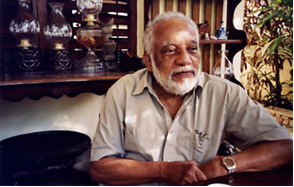
In it, the Vodou pantheon takes center stage as a way of re-vitalizing a dying West. Here the wisdom of Vodou serves as a rainbow, a new hope, for the battered West.
It is important to note that Vodou has had a very long history of mixing religion and politics in Haiti, the second nation in the Americas to become independent from European powers and the only successful slave rebellion in history. From the Bois Caiman Ceremony at the eve of the Haitian revolution, to today, these two elements have fed from each in other.
Idealism that seeks to transcend, via synthesis, the white/black dichotomy that plagues the world.
Love and revolution are two sides of the same coin in Depestre. Sometimes love takes the form of eroticism that cannot be confused with the moralistic overtones that eroticism takes on the West. If sexual acts are described, they represent an act of liberation from rationality, and not aggression against women.
In the opening, Depestre renders tribute to the influences of Jacques Roumain (Marxism in Haiti via Cuba that sings the land), René Char (Image of the rainbow as hope, renewal of innocence, step ahead of those suffering), Louis Aragon (poetry that is politically engaged; the image of the rainbow), Quechua wisdom (rainbow as weapon of the oppressed), Vicente Huidobro (rainbow from old days of Pharaohs that has lost its coloring – Chilean creacionismo, politically motivated), Carl Sandburg (American poet, Pulitzer prize winner and children short story writer where he praised the local landscape to replace European kings and queens from children’s stories), Guillaume Apollinaire (French avant-garde, inspiration for cubists and surrealists, against war), and Frantz Fanon (humanism in F).
The poem is divided in five main sections that address the healing task of the White World via the Wisdom of the Vodou pantheon.
1. Prélude:
1. Affirmation of self “Oui, je suis un nègre-tempête/Un nègre racine d’arc-en-ciel” as part of a larger unity, that of the planet. It is a force that is being channeled to transform, through the use of destructive forces “La foudre sur vos toits, c’est moi!/Le vent qui brise tout, c’est moi!/Le virus que ne pardonne pas, c’est moi”/Les désastres à la Bourse, c’est moi”. And we can say he becomes one with the elements to tell the world of the crimes and hypocrisy at the hands of those so proud of their crown of thorns (IE the Christian West).
2. The poetic voice breaks his silence to compose a list of evils with the hope of reconstituting a new “géographie solaire”, he drowns old beliefs in alcohol (as a form of cleansing ritual) and gathers all the forces from an earthy “négrerie” (is this a preparation for négritude?)
3. Amidst death and destruction by fire, he prepares for further cleansing by fire.
4. We find ourselves in Alabama to face the American family-who represent all that is wrong with America. Religious and political hypocrisy (KKK, electric chair, atomic bomb) and the poetic voice, like Abraham is ready to inflict destruction to bring about consciousness. The entire family becomes a sanctuary for his Vodou ceremony and ritual.
5. All will be silence, except the sound of destruction of the lies of the Alabama judge and his family and the poetic voice converted into a dog, a cat, tree, sea urchin, topaz, ant and turtle, he will show them real spirituality. Because real time never arrive in Haiti (does he mean that the promise of modernity never reached its shores?)
2. Epiphanies des dieux du vaudou – ironic use of Christian tradition
- 1. Atibon Legba presents himself complaining because his ritual scene (bagui) is not ready for him. He is the Loa of the crossroads, of doors and all crossings. He straddles two worlds: life and death. He bodes farewell to white customs and clamors for his ritual objects. He has his apostles, but they will not commit treason like Judas.
- 2. Ogou Ferraille arrives with his sword and fire, ready to use it to enlarge men, whom he knows so well
- 3. Damballah-Wedo, the serpent-rainbow Loa is here to possess the oldest daughter of the Alabama judge. Loa of fertility
- 4. Agoue-Taroyo, the water Loa of the ocean, has come no longer in a forgiving spirit, but to unsettle and rise the destructive forces of water by possessing the wife. (aside story in South Africa, he who took the lynched black man by the hand across the sea)
- 5. Ogou-Badagris another warrior Loa of the sword, comes to express his thirst for sacrifice. Sexual sacrifice of the Alabama judge’s daughters.
- 6. Guédé Nibo parody of the crown of thorns, overthrows by mocking christian tradition
- 7. Azaka-Mede Loa of agriculture – sexual connotations, repetition of “coniller”
- conilleur” that ought to emphasize the liberating force brought about by invoking this Loa.
- 8. Cousin Zaka Loa of agriculture juxtaposes the cutting that takes place during field planting to the cutting that takes place in America, in the military form of wars (West Point), that kills hope. His battle is Marxism (Playa Giron – Cuba- Bay of Pigs – 1961). America is in decline and will
- 9. Agassou guardian of tradition – sexual is source of metamorphosis (into a mermaid)
- 10. Cap’tain Zombi altered stated of perception (Makes one think of Baudelaire’s correspondances) Incantation that is an outburst of energy. The zombi, a fantasy that plays with all rational ideas of life/death dichotomy is a living contradiction. He straddles two worlds: living and dead. He is present as the voice of the dead, those who cannot be forgotten and will be remembered after Captain Zombi’s ritual. This section is very close to Césaire’s Cahier. The scenes of destruction represent a way to bring back to life a past that has not been dealt with and that is very much alive. His is a voice of prophecy, by traveling in time he becomes a fuller presence, an experience of oneness with nature
- 11. Baron Samedi his white beard is the nest for wasps (like white world is a nest of pain?) he casts spells and curses on all the family members of this Alabama home. He plunges in alcohol (new baptism) their destinies and transforms them in zombis – Complete overturning : they become the zombis.
- 12. Chango the orisha of fire, thunder and lighting enters into ceremonial ritual to cleanse with alcohol (water) and fire the hands -barren of life- of the white judge in Alabama. He cleanses the wombs of the young women and prepares them by purifying their bodies to receive (via a ritualized sexual act) the light of a new day, a new life.
- 13. Ti-Jean Sandor has the power to transform the sons of the Alabama judge into animals or objects (a dog, a boiler) and seeks to use his hatred for the hate of the white man, in conjunction with the destructive forces of nature (cyclone and earthquake) to swallow the bitter Southern world. His hatred is a healing one, it allows him to baptize all the pain and lost world of the black cosmos that emerges with renewed wings.
- 14. Agaou a Loa that will hold fast to the flesh of the white man until the revolution is accomplished. He is a master of binding prejudice and fantasies to humiliate the white judge from Alabama
- 15. Baron-La-Croix has the ability to make himself in the form of a dog, a black butterfly and transform the entire family into small crosses.
- 16. Loko the Loa of maps/cardinal points; but also the Loa of initiation: he is both mirror and key that will unleash the transformations.
- 3. Le Bain du petit matin
Depestre reappears as the ceremonial houngan who controls the 15 Loas present in the epiphanies. The sea thus becomes a ritual bathtub that will cleanse and transmute the evils of the racist South. Sea water becomes the catalyst for transformation, containing fluids from all sorts of origins. Each Loa provides an offering. It will undo madness, provide hope, stop destruction, humanize men, bring joy and deliver all men from pain.
4. La Cantate à sept voix
These seven female Loas enter the stage to clarify what is going on. They reiterate the departure of the male Loas across the ocean towards America (Alabama), which also has to be conceived in larger terms for what it represents (the epitome of racism in the white world) to possess the soul and body of Depestre/poet. These female vodou goddesses also discuss how they will cleanse the white hatred, to help the tidal wave that Depestre represents to be transformed into light, truth. It represents an alchemical change “copper became gold”.
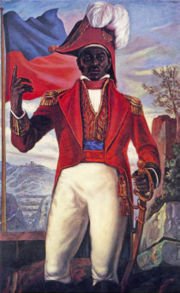
They will each sing the praises of 7 pillars of innocence: Makandal (Haiti), Toussaint Louverture (Haiti), Dessalines (Haiti), Antonio Maceo (Cuba), Charlemagne Peralte (Haiti), Patrice Lumumba (Congo), Malcolm X (US)
5. Les sept pilliers de l’innocence
Ode à Makandal
Ayizan (Atibon Legba’s wife) Invokes him from the depths of the sea. He who belongs to the vegetable and animal world more than to the human world. The first to attempt to cleanse the white hatred (through poisoning, fire, vodou) arrives to join in the overall cleanse.
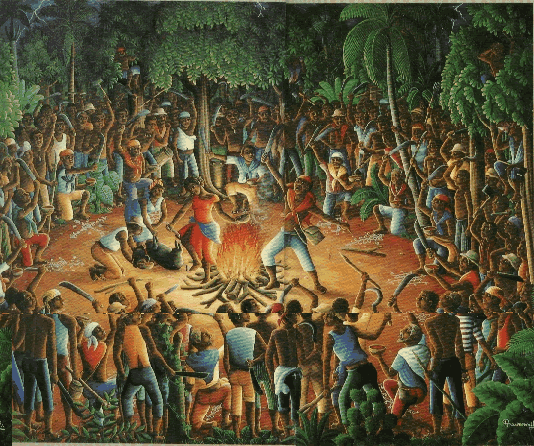
Ode à Toussaint Louverture
Aida Wedo (wife of Damballah, goddess of the rainbow) memorializes the father of new beginnings to bring about the first bells of recovery. To remind us that white oppressors are not insurmountable, that the ire of the black oppressed can be powerful. And that even while his destiny was tragic (died in the Jura prison in France, frozen amidst the snow) in his island, freedom had already taken root.

Ode à Dessalines
Erzili (beauty, love, luxury; often identified with Mary) invokes Dessalines to bring the destructive energy of fire (the same that was used in Haiti) to eradicate hate and dogmas of the White Alabama.
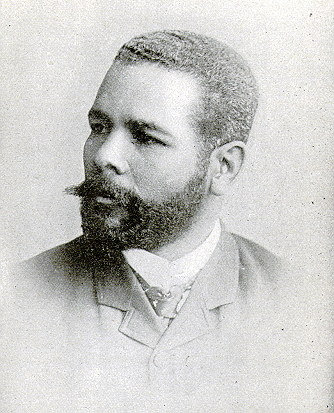
Ode à Antonio Maceo (el titano de bronze; revolucion independentista de Cuba, inspiration for Jose Marti, believed in Republican model of governing, refused American intervention )
Caridad del Cobre (virgin of the sea; twin to Erzili in Cuba) after lauding his size, origins and convictions (action and morals) praises him joined by other insurgent leaders of America (Fidel Castro, Marti, Toussaint, Bolivar, OHiggins, Juarez, San Martin, Lincoln, John Brown, Peralte) in an independent and free Cuba, a land that has overcome racial divisions.
Ode à Charlemagne Peralte
Guede Maza l’Orage (androgynous Loa; grave digger) brings from the dead the story of the man who had the courage to stand up to the “Yankee law” in Haiti, who became a martyr in a cross, who had the last words of life and pride amidst a miasma of defeat and death. In this ode we are surprised by the humility that asks to face their enemies like brothers, to welcome them and fight for liberty to the last drop of Haitian force.
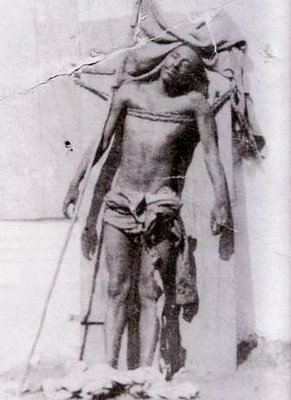
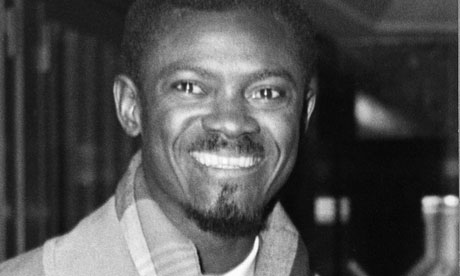
Ode à Patrice Lumumba
Simbi, the goddess of water sings the first Prime Minister of the Democratic Republic of Congo, deposed and killed with the collaboration of Belgian forces, recalling his collision against the capitalist interests of the Union Miniere du Haut Katanga, the largest mining company in the Belgian Congo. His innocence and pure intentions, which symbolize the decolonization movements from Algeria to South Africa, are met with not only the capitalists interests of Europe and US, but with those Africans who collaborate with and enrich themselves thanks to the West. But his visionary ideas could not be realized. It was too late, he was sold by traitors and his light could not shine over Africa.
Ode à Malcolm X
Grande Brigitte (wife to Baron Samedi and Loa of the dead) sings to the black man from Harlem who hated corruption and received his wisdom from the earth. A man who for a while hated the white man and then suddenly changed his views and allowed doubt to enter this hatred, and he was transformed by sadness and cleansed through his tears the evils committed by man. Faith became a safe haven in his fight, not just his Islamic creed, but he also reached out to Christians to be islands of peace among pain. And we are told that when he begins journey to recount how the white man has been spreading hatred on the earth, he was killed. The Harlem-lamb who hated tears, chains and hatred is no more.
Aphorismes et paraboles du nouveau monde
1-9 Denegation of history of racism and slavery – or a an attempt to rewrite a new edited history of the world?
10 -18 retelling the main axis of the dark history of abuse of men by men; the lines that divided one side from the other were clearly divided in the sand
19 and part of this abuse gave birth to creoles: born of the encounter of white and black men and women
20 clandestine love
21- new brotherhood despite the rules separating one race from the other
22-23
24 dance and eroticism becomes an outlet for those kept as animals; it becomes a way of expression, of freedom
26-30 Overturning the ideas attached to black; ceases to be a lack and becomes source of creativity, clarity, joy
Pour un nouvel age du coeur humain (For a New Age of the Human Heart)
Les Dieux atomiques d’Omaha (The Atomic Gods of Omaha)
This could be thought of as the moment when the poet and his vodou pantheon will put into practice the regenerative method Depestre has been singing about. Here we are met with real events and the possibility of mechanistic annihilation of men and the planet. The Atomic bomb becomes an ever-present menace that terrifies the poetic voice.
On the one hand those who seek to destroy it along with all its poetic and creative visions, while on the other rise the vodou gods, who this time appear terrified a the view of the latest dehumanized creation men. A machine that has the ability to destroy beyond human dimensions because it is no longer bound to man.
Notre-dame des cendres – If Helen represents lust and greed, and she is on the side of those manufacturing the H-bomb, the pleas of the poetic voice to her to abandon that camp and return to the gods of vodou represents an attempt to redress order, bring back creativity for the good of humanity and abandon destructive drives.
Romancero d’une petite lampe – The only way out of this destructive impasse is for man is to go back to its humanistic creative sources. Depestre is calling for a new humanism, more generous, less violent.
His song is a small light, without grandiose claims, but seeking to calm the pain, and stand in its humanity, free, innocent like all men on earth. And yet he does not abandon his subversive style in his last move.
The poetic voice expresses his fraternity with the Christian West in a final attempt towards undoing the Christian dogmatic system by transforming the canonical sign of the cross.
In a modified benediction, he replaces:
in the name of the father for Au nom de la révolte
of the son for et de la justice
of the holy spirit for et de la tendresse
and Amen for Ainsi soit-il


Leave a Reply